
 EN
 Romana
 Bulgarian










 Am colaborat cu LabelShop si pot spune ca experienta a fost una foarte placuta. Sunt profesionisti, prompti in preluarea comenzilor si onorarea lor. Produsele sunt calitative. Sunt pe lista mea de furnizori la care revin constant. Felicitari si multumesc!
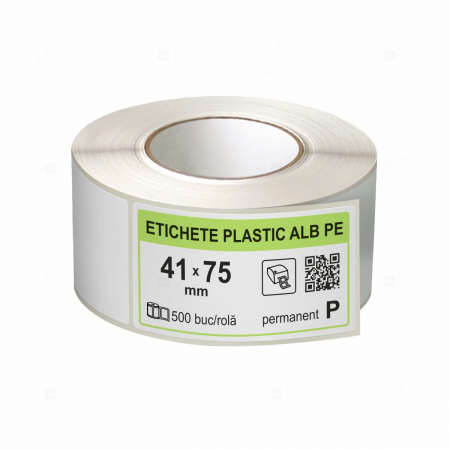
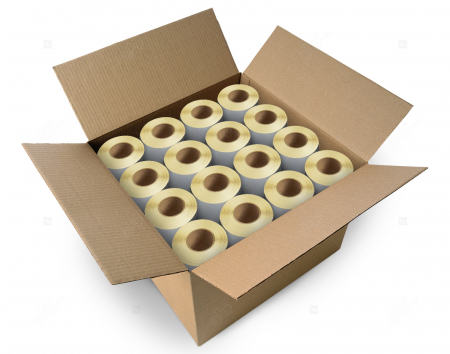
 Label roll of 500 white PE film labels, 41x75 mm, permanent adhesive
Self-adhesive white polyethylene plastic labels for plastic, cardboard and metal surfaces. Printing with wax-resin or resin ribbon.
Beneficii:
Found a better price? write to us and we will sort it out
Free delivery: terms
Delivery date: 72 ore
Product Code:
ER35R41X75CA
Do you need help?
0720 770 659
Others also bought
- Description
- Reviews (0)
Each label roll holds 500 white polyethylene labels of 41x75 mm with permanent adhesive. The format suits product labels, barcodes and container marking. The synthetic film resists moisture and tearing better than paper. Printing is thermal transfer with a wax-resin or resin ribbon.
Specifications
| Label type | Self-adhesive polyethylene |
| Intended for | Ribbon printing |
| Shape | Rectangular with rounded corners |
| Colour | White |
| Finish | Gloss |
| Adhesive type | Permanent |
| Outer diameter | 100 mm |
| Core diameter | 38 mm |
| Label layout | 1 across |
| Labels/roll | 500 labels/roll |
PE plastic labels for professional use
Polyethylene significantly changes the behaviour of the label compared with a conventional paper face stock. The material offers better mechanical resistance and maintains a professional appearance of the labelled product. These
PE plastic labels
are suitable when paper does not sufficiently meet the application requirements. The flexible material allows them to be used in numerous professional identification and labelling processes.
The labels can be printed with names, barcodes, internal codes or other information needed for product identification.
Polyethylene labels with permanent adhesive
The permanent acrylic adhesive is intended for applications where the label must remain fixed to the product. It allows the labels to be used on materials such as plastic, cardboard or metal. Final adhesion may be affected by the type of surface and the conditions under which the label is applied. Therefore, for special surfaces, testing the label under real working conditions is recommended.
The combination of
PE face stock and permanent adhesive
is suited to processes where secure fixing and material durability are of greater importance.
Self-adhesive labels printed by thermal transfer
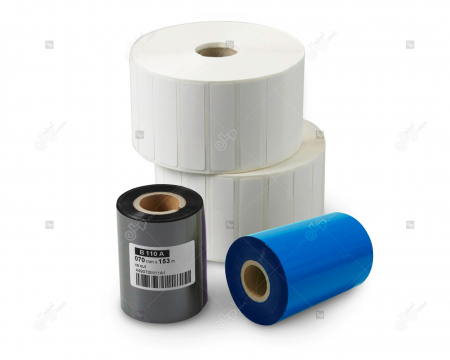
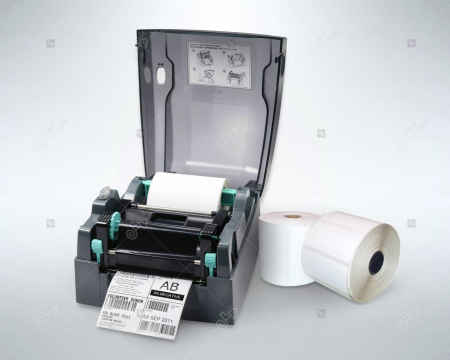
Polyethylene labels are designed for thermal transfer printing. The process uses a
ribbon
to transfer the information onto the label surface. For plastic labels, wax-resin or resin ribbons can be used, depending on the material and printing requirements. Compatibility between the label, ribbon and
printer
should be checked before use.
Thermal transfer enables printing of barcodes, text and the information required for production, identification or inventory management processes.
Why choose plastic labels over paper labels?
The main difference lies in the face stock. Paper remains suitable for many everyday applications, but PE plastic offers better mechanical resistance. This advantage matters when labels are handled frequently or when the application requires a more durable material than paper. In addition, the label surface retains a neat, professional appearance.
The choice should be based on the product, the application surface and the conditions in which the label will be used.
Labels for professional printing
The roll format allows the labels to be integrated into existing printing processes. Depending on the equipment, they can be supplied in configurations compatible with various label printers. Polyethylene labels can support identification activities in production, retail, warehousing or logistics. Printed information thus stays linked to the product by means of a label with a face stock more durable than paper. For the right choice, check the roll size, printer compatibility, ribbon type and the surface to which the label will be applied.
Where PE labels can be used
Plastic labels are suitable for:
- Packaged food products.
- Cosmetics and personal care products.
- Plastic or metal containers.
- Boxes, bags and retail packaging.
- Warehouse and distribution products.
- Barcodes, batch numbers and internal identifiers.
- Industrial equipment and components.
For food contact, check the exact documentation for the material, adhesive and ink. Compliance should not be assumed solely because the label is made from PE.
Small or large rolls
The roll configuration must match the printer and the pace of work. Small rolls often suit compact printers and flexible orders. Large rolls can reduce operator intervention in high-volume workflows. Before ordering, check the outer diameter, core, winding direction and number of labels. The right choice limits jams and helps teams work without unnecessary interruptions. Cost per label becomes easier to control when the format matches the equipment.
Value for business operations
PE plastic labels contribute to a neater presentation and more reliable identification. Managers can standardise product appearance, codes and internal information. Clear marking helps staff recognise products quickly and reduces handling errors. In addition, the permanent adhesive limits accidental detachment during transport. For applications involving heavy abrasion or outdoor exposure, a technical recommendation should be requested. The right material protects the investment in packaging and brand image.

If you want to express your opinion about this product you can add a review.
write a review
Frequently bought together

Set 100 buc - Protectii carton ondulat CO3, 800 x 1200mm

Cutie 5 x Top hartie A4 copiator, 80g/m², 500 coli/top, OFFICE
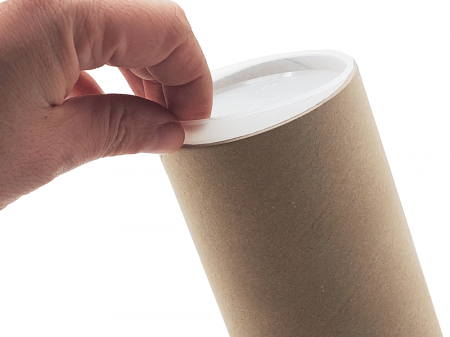
Capace din plastic pentru tuburi din carton, 77mm, set 50 bucati
-

Ioan-Andrei Zamfir
Am colaborat cu LabelShop si pot spune ca experienta a fost una foarte placuta. Sunt profesionisti, prompti in preluarea comenzilor si onorarea lor. Produsele sunt calitative. Sunt pe lista mea de furnizori la care revin constant. Felicitari si multumesc!
-
Emanuel Nedelea
Best in town, atat etichetele cat si serviciile sunt de foarte buna calitate, recomand cu drag. -
Marius Zinveliu
Cea mai tare companie. Ai nevoie de o eticheta? Ei stiu sa le faca pe toate....chiar si pe cele care inca nu au ajuns pe piata mainstream. Mi-as dori sa existe mai multe companii de acest gen (inovatoare si deschise) in mediul romanesc de afaceri. Thumbs up! 5Stele

